

“The last of the human freedoms: to choose one’s attitude in any given set of circumstances, to choose one’s own way.”
Viktor Frankl
Being able to stay in control of ourselves regardless of what’s happening around us is a tall order indeed. Control like that can be hard to imagine. Sure, when life is flowing smoothly, it’s easy to feel like we’re in charge. But when the going gets tough, even the tough begin to feel jerked around by circumstances.
In this article I describe how we can remain in charge of our behavior pretty much no matter what’s happening around us. This can be accomplished by managing our attitude and our perspective. I dare say that applying these truths has the power to shape our destiny more than any other force within our control.
The Two Women
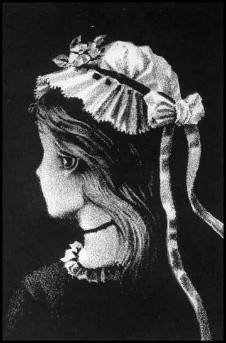
Can you see the two women?
Each of us has a “power switch.” This switch is our ability to control which way we choose to perceive, evaluate, and interpret every situation we face. In psychology books, authors write about the different ways two people can see the very same thing. To illustrate, they often reproduce an old “optical illusion” drawing that has been around for over one hundred years. “Can you see the woman?” they ask. Most people have no trouble immediately identifying a woman in the picture. But then comes some sort of trick question like: “What do you see?” Or, “Is she the bride or the mother-in-law?”
In truth, there are two women in the image. Depending upon which way a viewer looks at it—depending on the way the viewer “throws the switch” —the image can be seen as either a pretty young woman turning away or as a weathered older woman looking straight left.
Still hard to see them both? If you’re stuck, you’re not alone. Most people have a hard time flipping the “power switches” of their perspective back and forth. Here’s a hint: The young woman’s nose is the older woman’s nose wart, and the young woman’s necklace is the older woman’s smile.
Life is a lot like “the younger woman and the older lady” perspective test. We have to decide which way we’re going to view something, which way we’re going to throw our switch. Are we going to turn it OFF and be enveloped by the darkness of devastation and disaster, or are we going to throw it ON and be bathed in the light of solutions, opportunity and possibility? Due to how stress impacts and minds and bodies, our mental health and our health overall are critically dependent upon which way we throw the switch. On the one hand, we experience anxiety, despair, fear, resentment and the temptation to give up. On the other, we experience courage, perseverance, resourcefulness, hope, and the possibility of new beginnings.
How Can We Throw the Switch ON?
“But,” we protest, “my situation is really bad! You have no idea how bad it really is!” I do not doubt that you may be facing tough times. Corrections work is one of the most demanding professions in the U.S. today. And we must accept the reality that life is difficult, period, as Scott Peck wrote in his best seller The Road Less Traveled. Yet, as my ancient Greek ancestors said, we must equally accept that there is nothing bad without some good mixed in with it, without something good that can be mined from it. The question is, are we going to look for the good?
The key to throwing the power switch ON is found in what we choose to make our focus. Do we zero in on the loss or the opportunity? On the bottle being half empty or half full? Do we feel weary and resigned to a negative fate, or are we young at heart anticipating the possibilities a bright future awaiting us? Do we become overwhelmed by disappointment, or do we dig in to unearth the jewels buried below the mud? What we look for, we are likely to find sooner or later.
We have options. Someone told me that life’s challenges can make us either bitter or better. The difference is in the “i” or in the “eye”—the way we see our situation.
One option is to get angry and resentful, or to become demoralized and give up. That’d be throwing our power switch OFF, reacting by “kicking and screaming,” being thrown around by our circumstances. The situation would be controlling us, running the show and possibly ruining our lives.
A second option is to throw our power switch ON by choosing to look at the situation with new eyes, the eyes of positive expectancy and a type of trust. How can I come up with solutions to the challenges staring me in the face? How can I make this hardship work for me? How can I turn this pile of manure into fertilizer for my own personal growth and for the benefit of others?
Why Throw the Switch ON?
Throwing our power switch ON empowers us with hope and positive anticipation so we can hold on and persist in our efforts. It also opens up our eyes to see how hardship can be put to work for our own good and the good of others in ways we had not anticipated before. In other words, throwing our power switch ON both makes us resilient and also keeps us resilient, able to persevere in spite of opposition, and able to bounce back after failure, loss or rejection.
Everybody I know will testify that character development—our maturation as people—does not come about during easy times. Rather, character is usually forged in the fires of affliction. We might exclaim, “Who wants more character! I’m fine the way I am!” We may be just fine, but this hardship has just kicked our door down, and whether we like it or not, it’s now in our face and in our space. What will we choose to do?
We do indeed have the power to make productive fertilizer out of the manure that has been dumped on our doorstep by developing qualities in ourselves that are in line with our highest values. For example, we may find that tough times provide us with opportunities to develop skills and launch endeavors that we would have never considered had the hardship we encountered not happened. We may find ourselves practicing compassion, patience, ingenuity, or courage in ways we never thought were possible for us. We may come to value our relationships with others, and to appreciate life more than ever before. Additionally, our experiences of adversity may become springboards for helping others with the life lessons we learn and the skills we acquire.
In choosing to throw our switch ON, we decide to no longer waste precious energy and time in fruitless resentments and exhausting fist pounding about situations or people. Grudges sap our strength and slowly poison us. Instead, we want to see past adversity to ways we can move to new methods of operating. We focus on problem-solving and personal growth. Doing so takes us out of a helpless victim position and brings us back to the controls again. History is full of stories of courageous individuals who inspire us because they used the trials of life to reach new heights of love and service through self-control and by how they chose to respond to their circumstances.
In Conclusion
In short, what makes or breaks us is not what happens to us, but how we deal with it. Do we react, seeing only the negative, or do we thoughtfully examine the possibilities and chart a positive, perhaps “out of the box” course? What to one person becomes the end of the road to another is a whole fresh set of opportunities. Let us aspire to become people who bounce back after hard times, truly tougher, wiser and perhaps even more noble.
